For B2B buyers sourcing cables for power distribution, industrial plants, or energy infrastructure projects, one of the first decisions is voltage classification. Low voltage power cables and medium voltage cables are not interchangeable — they differ in construction, insulation requirements, applicable standards, installation conditions, and cost structure.
This guide explains the functional differences between the two cable categories, when each type applies, and what specification details matter when placing a project inquiry.
What Defines a Low Voltage Power Cable
Low voltage power cables are designed for systems operating at or below 1kV AC (or 1.5kV DC). In most international standards — including IEC 60502-1 — this covers the majority of building distribution, commercial power systems, and general industrial installations.
Typical applications include:
- Distribution boards and panel feeders inside industrial plants
- Commercial building power wiring (HVAC, lighting, equipment circuits)
- Motor and pump connections on factory floors
- Street lighting and urban infrastructure
- Short-distance feeder cables in substations at the LV output side
Low voltage cables generally use PVC or XLPE insulation, with optional armoring (SWA or AWA) depending on installation environment. The conductor is typically stranded copper or aluminum, sized according to current-carrying capacity and voltage drop requirements.
Key Point: LV cables do not require a metallic screen layer. The absence of a voltage screen simplifies construction and reduces cost, which is one reason LV cables are the default choice for most facility and building projects.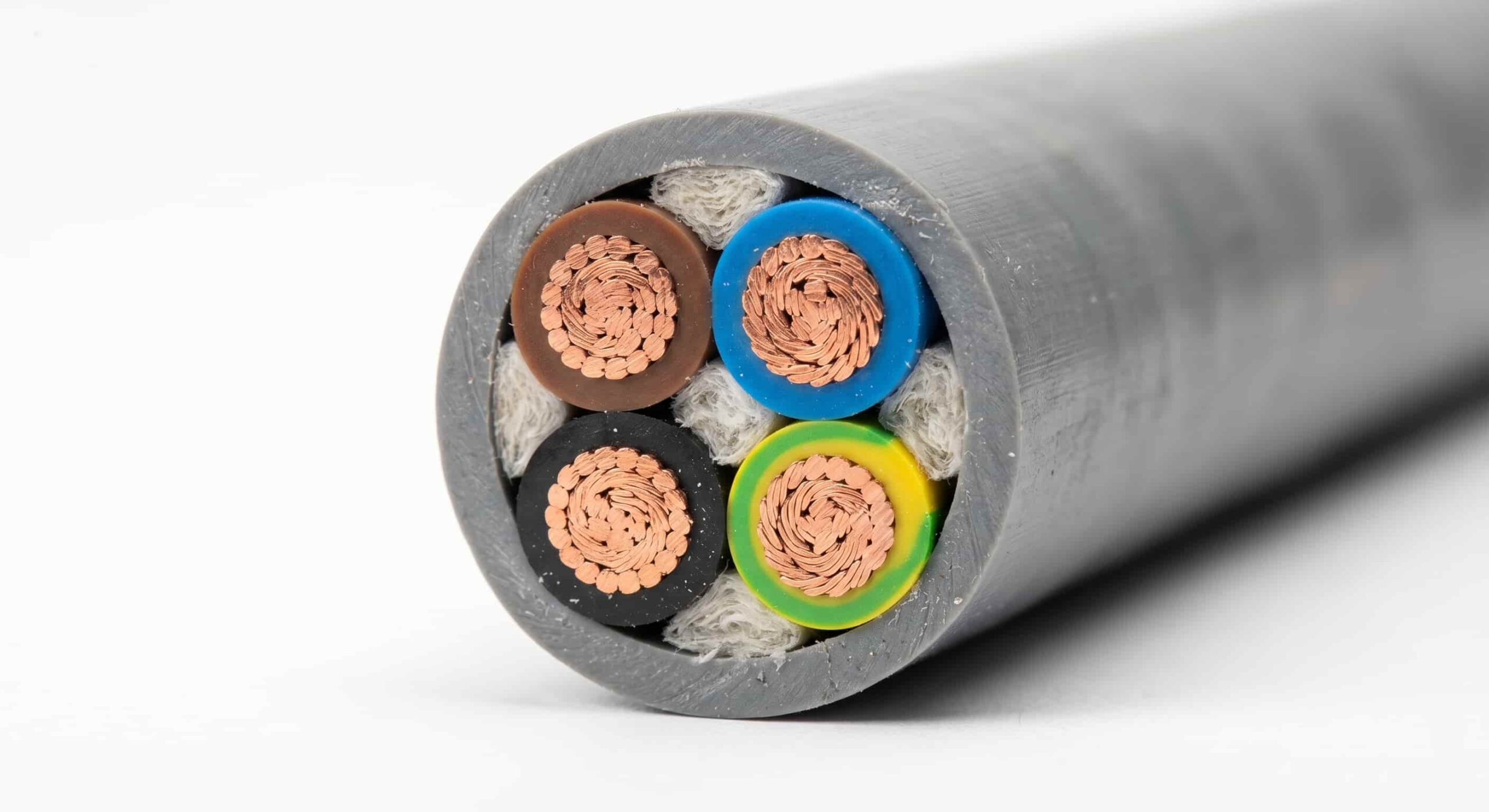
What Defines a Medium Voltage Cable
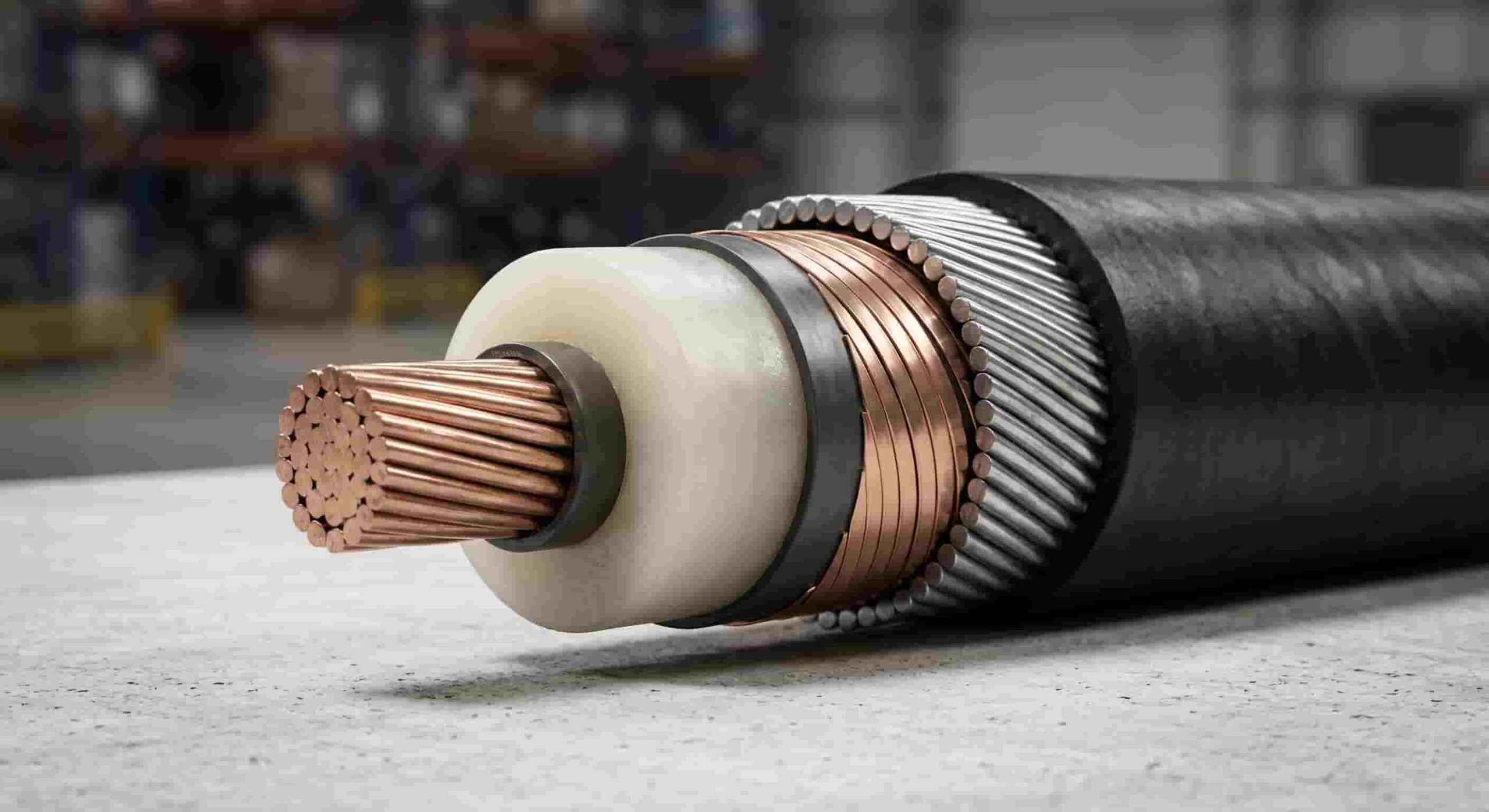
Medium voltage cables cover systems from 1kV up to 35kV — and in some classifications up to 52kV. The IEC 60502-2 standard governs cable design in this range. Unlike LV cables, medium voltage cables require a defined insulation screen (semi-conductive layer) on both the conductor side and the insulation outer surface, along with a metallic screen to control electrical field distribution.
This additional construction is not optional — it is a safety and performance requirement. Without a properly grounded metallic screen, the electric field in a medium voltage system concentrates at conductor irregularities, leading to partial discharge and eventual insulation failure.
Common medium voltage cable applications include:
- Primary distribution feeders from substations to factory or campus distribution points
- Utility grid distribution at 6kV, 10kV, 20kV, or 33kV
- Wind farm and solar farm cable runs from inverter step-up transformers to grid connection
- Mining and heavy industrial supply at elevated voltage to reduce current and line losses
- Underground urban power distribution networks
Construction Differences: Layer by Layer
The most practical way to understand the difference between LV and MV cables is to compare their cross-section layer by layer.
Voltage Grade Designation and How to Read It
International cable standards express voltage rating as U0/U (Umax), where:
- U0 = rated voltage between conductor and earth (or metallic screen)
- U = rated voltage between conductors
- Umax = maximum system voltage the cable is designed to operate under
For example, a cable marked 0.6/1kV is designed for 0.6kV conductor-to-earth and 1kV conductor-to-conductor — this is standard low voltage. A cable marked 6/10kV is a medium voltage cable for 10kV systems.
Standards: IEC, BS, and Regional Variants
Most global B2B procurement follows IEC standards, but regional equivalents or add-on specifications are common in specific markets.
For export-oriented procurement, buyers should confirm whether IEC compliance alone is sufficient, or whether the destination country requires additional local certification (such as CE marking in Europe, or approval by a national utility authority). RichingPower can advise on standard compatibility for specific export destinations.
Note: GB/T standards in China are largely harmonized with IEC for power cables, so factory-produced cables tested to GB/T can typically be cross-referenced against IEC requirements. Always request the test report referencing the applicable standard.
Insulation Types: XLPE vs PVC
Both LV and MV cables can use XLPE (cross-linked polyethylene) or PVC insulation, but XLPE is strongly preferred for medium voltage and increasingly the standard for LV applications as well.
- XLPE: higher operating temperature (90°C continuous), better electrical properties at elevated voltage, lower dielectric loss, suitable for MV
- PVC: lower cost, adequate for LV general wiring, limited to 70°C continuous, not suitable as primary insulation for MV
For project procurement, XLPE insulated cables are the default recommendation for any installation where long service life, thermal stability, or elevated voltage is involved. PVC-insulated cables may be appropriate for internal panel wiring or short-run LV circuits where temperature constraints are not a concern.
Armoring: When It Is Required
Armoring provides mechanical protection against impact, rodent damage, and soil stress. Both LV and MV cables can be supplied with armoring, but the requirement depends on installation method:
- Direct burial: armored cable (SWA or AWA) is strongly recommended
- Cable duct or tray: unarmored cable is acceptable if duct provides adequate protection
- Overhead installation: not applicable — separate aerial bundled cable product
- Marine or offshore: specialized armored and sheathed construction
Key Point: SWA (Steel Wire Armoring) provides higher tensile strength and is preferred for direct burial. AWA (Aluminum Wire Armoring) is used in single-core MV cables to avoid induced currents in magnetic armor — a technical requirement, not just a material choice.
Conductor Sizing: mm² and Current Capacity
Conductor cross-sectional area (mm²) determines current-carrying capacity. The selection depends on load current, cable length, acceptable voltage drop, and ambient installation conditions.
Common conductor sizes by application:
- LV distribution feeders: 50mm² to 300mm² (copper or aluminum)
- LV branch circuits and motor connections: 4mm² to 95mm²
- MV underground feeders: 35mm² to 400mm² depending on load and distance
- MV renewable energy cable runs: 150mm² to 630mm²
For buyers new to specifying cable cross-sections, consult IEC 60364-5-52 (current-carrying capacity tables) or request technical support with a load calculation. See also RichingPower’s power cable product pages for conductor size availability by product type.
Specification Checklist for B2B Buyers
When preparing a cable inquiry for either LV or MV products, the following information is required for accurate quotation:
- Voltage grade (U0/U format, e.g. 0.6/1kV or 6/10kV)
- Number of cores (single-core or multi-core)
- Conductor material (copper or aluminum)
- Conductor cross-sectional area (mm²)
- Insulation type (XLPE or PVC)
- Armoring requirement (SWA, AWA, or unarmored)
- Outer sheath color (where required by local regulation)
- Applicable standard (IEC 60502-1/2, BS 6622, or other)
- Quantity (total meters or number of drums)
- Drum type and packing requirement (wooden drum, cable reel, coil)
- Delivery destination country
- Project name or reference (for documentation)
Tip: Including the installation method (direct burial, cable tray, conduit) and ambient temperature in your inquiry allows the supplier to advise on current derating factors and confirm the selected cross-section is adequate for the load.
Quotation Requirements
RichingPower accepts project-based cable inquiries for both low voltage and medium voltage cable supply. To prepare an accurate quotation, please provide the following:
- Cable type (LV or MV), voltage grade, and applicable standard
- Number of cores and conductor cross-sectional area (mm²)
- Total length (meters) or drum quantity and drum length
- Armoring and sheath requirements
- Destination country and port of delivery
- Project name and target delivery date (if applicable)
Inquiries can be submitted via the RichingPower contact page. For large or complex projects, attaching a cable schedule or single-line diagram helps expedite the review process.
Conclusion
The distinction between low voltage and medium voltage cable is not merely a matter of insulation thickness — it reflects a fundamentally different cable construction, applicable standards, and installation requirement. LV cables suit the majority of building, industrial, and distribution applications operating below 1kV. MV cables are engineered for grid-level distribution, substation feeders, and large industrial supply systems where higher voltage reduces transmission losses.
For B2B buyers, the most effective approach is to define the system voltage and installation environment before specifying cable type. If the voltage grade or construction is unclear, submitting a project outline and requesting a specification review is a practical first step.
View RichingPower’s full range of low voltage power cables and
Explore our medium voltage cable products or contact us with your project specification for a quotation.