
The choice between copper (CU) and aluminum (AL) conductor is one of the most commercially significant decisions in B2B cable procurement. Copper is the default for most applications — but for large-cross-section cables in fixed industrial and infrastructure installations, aluminum offers a meaningful cost reduction that is often overlooked by buyers defaulting to copper without evaluating the alternatives.
This guide explains the technical differences between copper and aluminum conductors, where each material performs best, the jointing and termination requirements that must be observed when using aluminum, and how to evaluate the cost trade-off for a specific project.
The Fundamental Difference: Conductivity
The core difference between copper and aluminum as conductor materials is electrical conductivity. Copper conducts electricity significantly better than aluminum — but aluminum is also significantly lighter and lower in cost per kilogram.
- Copper electrical conductivity: approximately 58 MS/m (megasiemens per metre) — the reference standard for conductor materials
- Aluminum electrical conductivity: approximately 35 MS/m — about 61% of copper’s conductivity
- To carry the same current, an aluminum conductor must have a larger cross-sectional area than copper — approximately 1.6 times larger
This conductivity difference is the starting point for all copper vs aluminum procurement decisions. It means that a 95mm² copper cable and a 150mm² aluminum cable carry approximately the same current — and a 185mm² copper cable is equivalent to a 240mm² aluminum cable.
Key Point: When comparing copper and aluminum cable quotations, never compare cross-section for cross-section — always compare equivalent current-carrying capacity. A direct cross-section comparison (95mm² CU vs 95mm² AL) is misleading and results in an undersized aluminum feeder if copper sizing is simply transferred to aluminum without adjustment.
Conductivity and Cross-Section: Why Aluminum Needs to Be Larger
The requirement for a larger cross-section when using aluminum has two downstream effects on the cable and installation: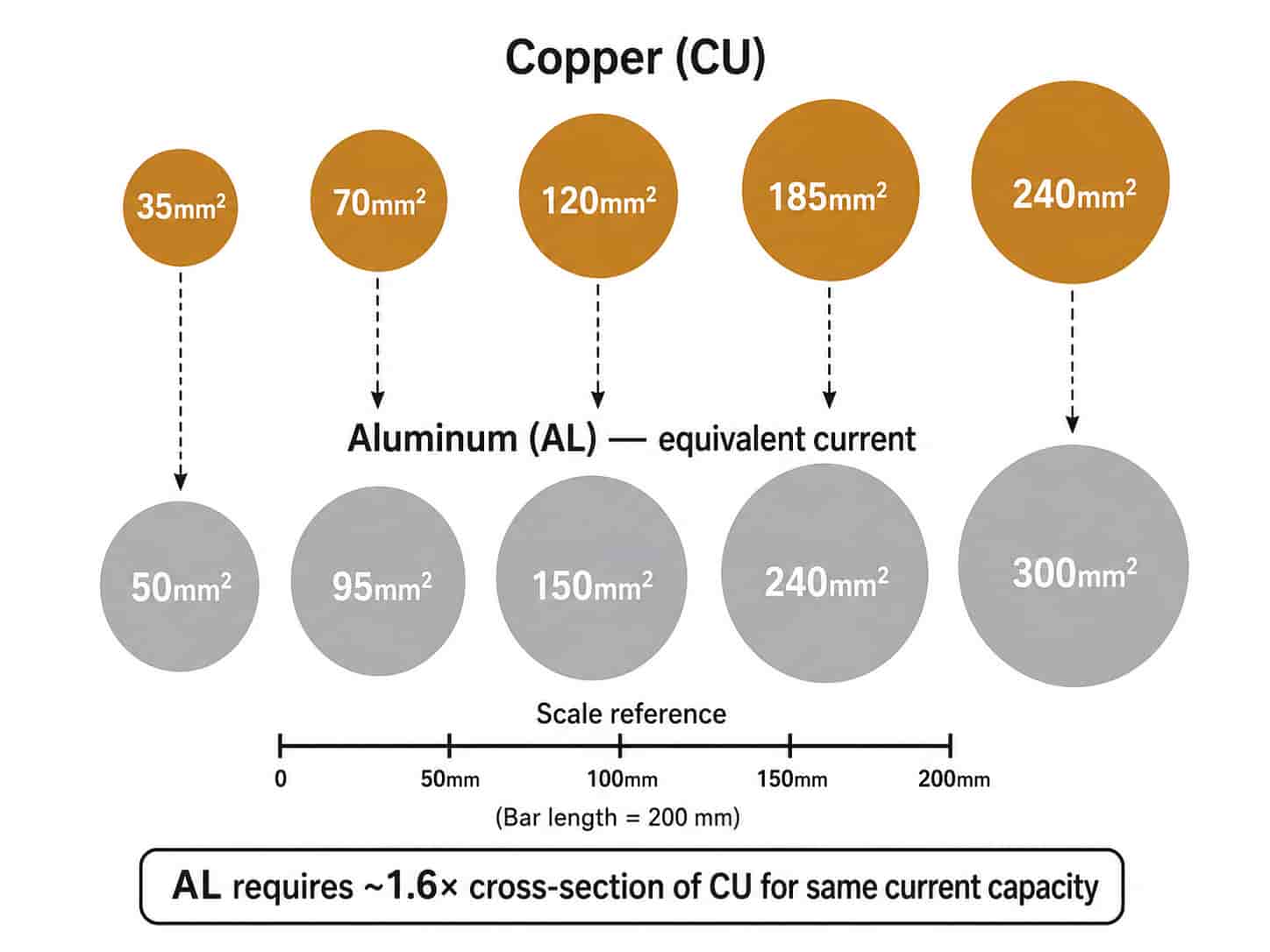
Larger Cable Diameter
A larger conductor cross-section means a physically larger cable — larger outer diameter, heavier per metre, and larger cable entry glands and terminal boxes. For installations where cable entry fittings are pre-sized — motor terminal boxes, switchgear cable chambers, conduit runs — confirm that the aluminum cable’s outer diameter fits the available space before ordering. An aluminum cable equivalent to a copper cable specification will have a noticeably larger outer diameter.
Larger Cable Tray and Conduit
On large-cross-section runs (185mm² and above), the increased diameter of aluminum cable may require a larger cable tray, wider conduit, or wider cable duct than the copper equivalent. For projects where cable tray sizes are already fixed in the civil design, confirm aluminum cable OD against the tray fill calculation before substituting.
Equivalent Cross-Section Reference
Note: The cross-section equivalence shown in Table 1 is based on equivalent current-carrying capacity in free air at 30°C ambient. Actual equivalence may differ slightly depending on installation method, derating factors, and cable construction. For project-critical sizing, apply IEC 60364-5-52 tables using the actual installation conditions for both copper and aluminum options.
Weight: Where Aluminum Has a Clear Advantage
Despite requiring a larger cross-section, aluminum cable is significantly lighter than the copper equivalent for the same current capacity. This is because aluminum’s density is approximately one-third that of copper:
- Copper density: 8.96 g/cm³
- Aluminum density: 2.70 g/cm³
- Weight comparison at equivalent current capacity: aluminum cable weighs approximately 50–55% of the copper equivalent — nearly half the weight for the same electrical performance
For long cable runs — main LV feeders in industrial plants, MV collection cables in solar and wind farms, underground utility distribution — the weight saving of aluminum has practical installation benefits:
- Lower drum weight — easier site handling, standard crane and roller equipment adequate for larger drum sizes
- Lower pulling tension — for cables pulled through conduit or duct, lower cable weight reduces pulling tension and the risk of conductor damage at bends
- Lower structural load on cable tray — relevant for overhead cable tray installations with restricted structural capacity
- Lower transport cost — lower weight per drum reduces freight cost for long-distance or international shipment
Key Point: For submarine cables, offshore installations, and aerial bundled conductor (ABC) applications, aluminum’s lower weight is often the primary reason it is specified — not cost. A lighter conductor means lower mechanical tension in the cable, smaller support structures, and lower installation forces.
Jointing and Termination: The Critical Difference
The most important practical consideration when specifying aluminum conductor cable is the jointing and termination requirement. This is where most aluminum cable installation problems originate — and where the cost saving of aluminum can be erased if not managed correctly.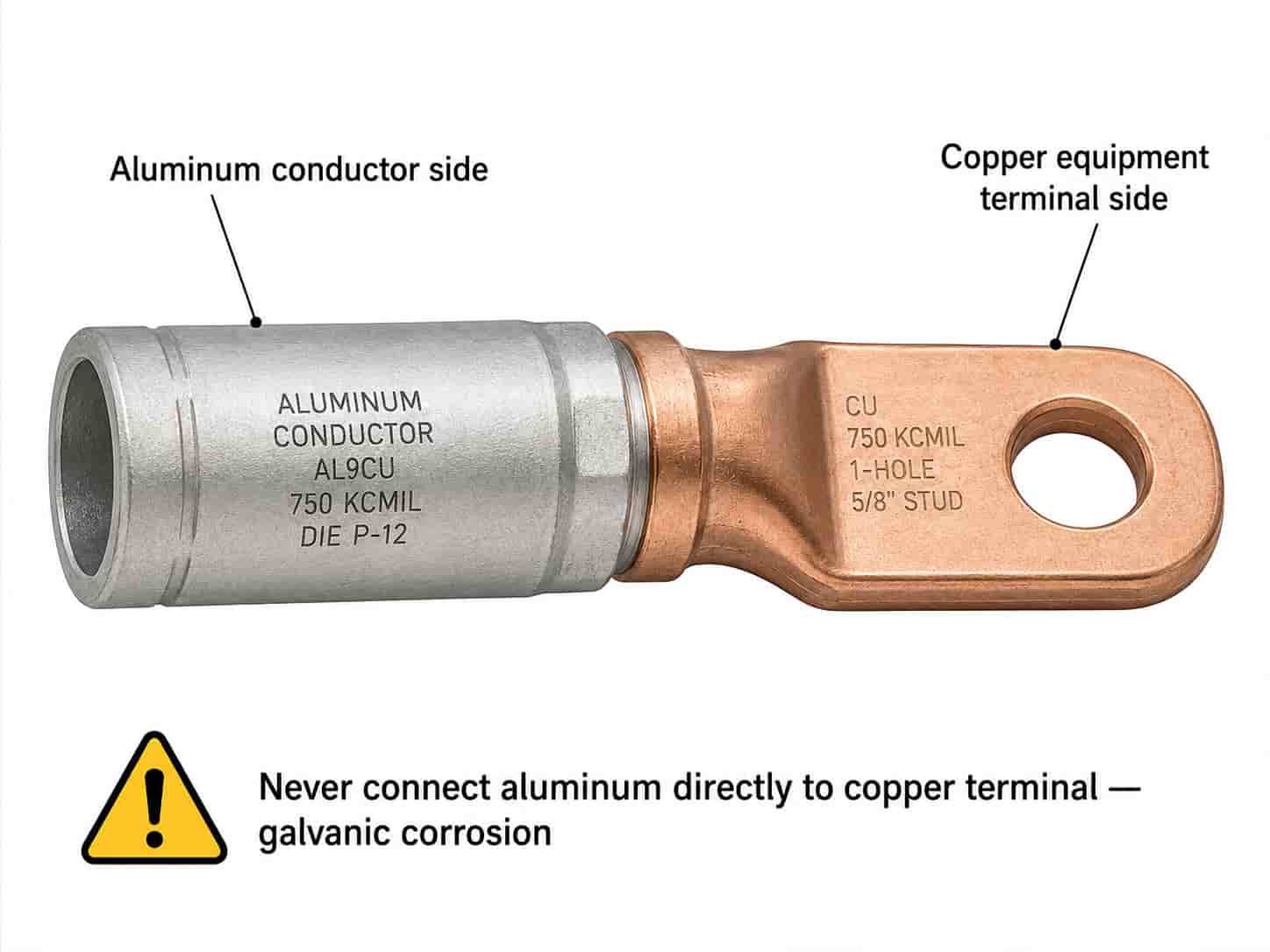
Aluminum Oxide Layer
When aluminum is exposed to air, it immediately forms a thin aluminum oxide layer on its surface. Aluminum oxide is an electrical insulator — if this layer is not removed or prevented from re-forming at the contact surface, it increases contact resistance, generates heat at the joint, and eventually causes joint failure.
Correct aluminum termination procedure:
- Use compression lugs or connectors specifically rated for aluminum conductors — do not use connectors rated for copper only
- Apply anti-oxidant jointing compound to the conductor end before insertion into the lug or connector barrel — the compound prevents re-oxidation after abrasion
- Abrade the conductor end before applying compound and inserting into the connector to break through the existing oxide layer
- Use correct compression tooling and die size for the lug and conductor cross-section — under-compression or over-compression both cause joint failure
Bi-Metallic Connections
Where aluminum cable terminates at copper equipment terminals — switchgear bus bars, motor terminal boxes, transformer LV terminals — a bi-metallic lug or connector is required. Direct contact between aluminum and copper in the presence of moisture causes galvanic corrosion that degrades the joint over time.
- Bi-metallic lugs: one end accepts the aluminum conductor, the other end provides a copper interface for bolted connection to copper terminals
- Bi-metallic connectors: used for inline joints where aluminum cable connects to copper cable
- Neutral link connections: where aluminum neutral conductors connect to copper neutral bars, bi-metallic links are required
Key Point: Specify and procure the correct bi-metallic lugs and anti-oxidant compound at the same time as the aluminum cable — do not leave termination material selection to the site electrician. Using copper lugs on aluminum conductors, or failing to apply anti-oxidant compound, are the two most common causes of aluminum cable joint failure in service.
Aluminum in Medium Voltage Cables
Medium voltage aluminum cable uses a different construction from LV aluminum cable. MV aluminum cables require:
- Compacted aluminum conductor — compacting increases conductor density and reduces the overall cable diameter compared to stranded round conductors
- Conductor screen (semi-conductive layer) — as required for all MV cables regardless of conductor material
- MV cable joints and terminations — cold-shrink or heat-shrink MV joints rated for aluminum conductors; confirm the joint kit manufacturer’s compatibility with the cable cross-section and voltage grade
Flexibility: Why Aluminum Is Limited to Fixed Installations
Aluminum has lower fatigue resistance than copper under repeated bending and vibration. This limits its use to fixed cable installations where the cable is not subject to movement after installation:
- Aluminum conductor: suitable for fixed, direct-buried, or tray-installed cables that are not moved after commissioning
- Not suitable for: trailing cables, reeling cables, flexible connection to moving equipment, motor connections subject to vibration, and any application requiring a flexible cable
- Not suitable for: cables that must be disconnected and reconnected frequently — repeated bend and re-terminate cycles fatigue aluminum conductors and degrade the oxide-suppressed joint surface
For all motor connections, VFD cables, trailing cables, and flexible supply cables, copper conductor is the correct specification regardless of cross-section. The flexibility and fatigue resistance of copper is essential in these applications and cannot be compensated by increasing the aluminum conductor cross-section.
When to Choose Copper vs Aluminum by Application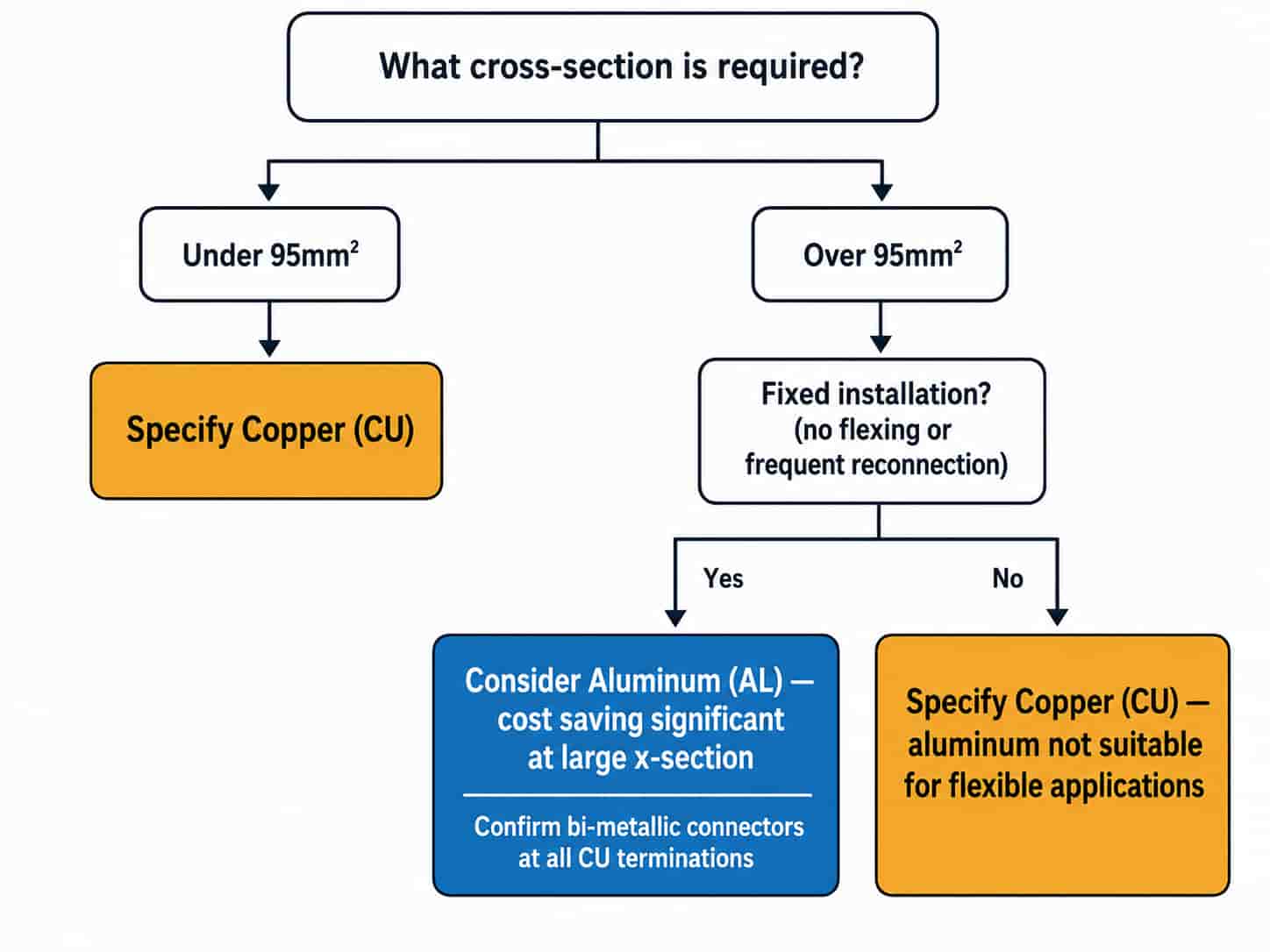
Summary: When Copper Is the Default
- Cross-sections below 95mm² — aluminum’s cost advantage is small at small cross-sections, and installation requirements add complexity that outweighs the saving
- Motor connections and VFD cables — flexibility and fatigue resistance required
- Trailing and reeling cables — dynamic applications not suitable for aluminum
- Control and instrumentation cables — always copper; aluminum not used
- Installations with frequent disconnection — copper performs better at reconnection joints
- Short cable runs — the termination material and installation labor cost is a higher proportion of total cable cost on short runs
Summary: When Aluminum Is Worth Evaluating
- Cross-sections of 120mm² and above — cost saving is meaningful at large cross-sections
- Long fixed installation cable runs — overhead line, underground feeder, main LV or MV distribution
- Projects with strict weight or structural load constraints — cable trays, aerial bundled conductors, submarine cables
- High-volume procurement where the per-metre saving accumulates — utility distribution projects, solar farm collection networks
Tip: For projects with a mixed cable schedule, a practical approach is to specify copper for all cables below 95mm² and evaluate aluminum for cables at 120mm² and above. This concentrates the complexity of aluminum jointing on the smaller number of large-cross-section runs where the saving is most significant.
Price Comparison and Total Cost of Ownership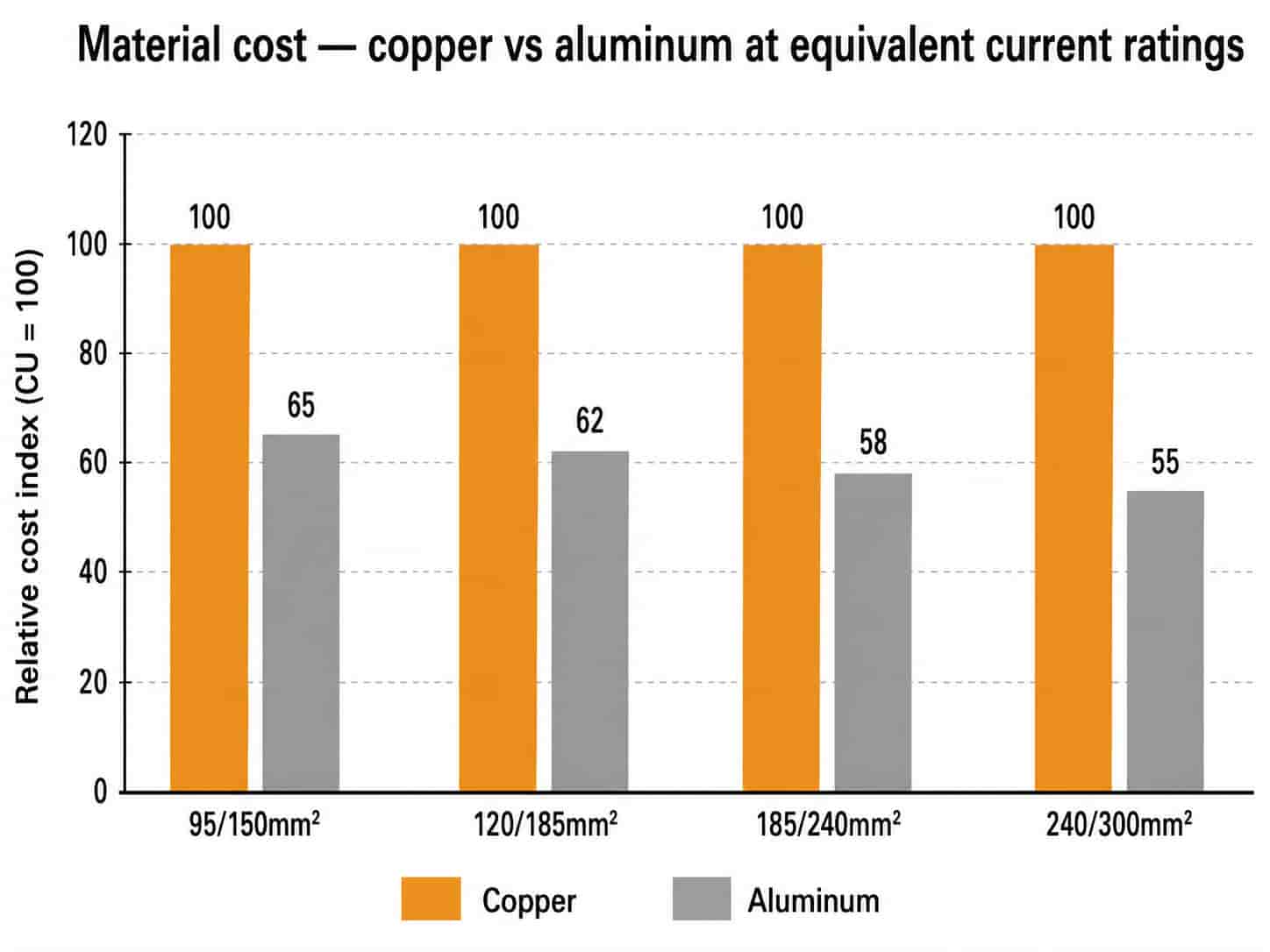
The price difference between copper and aluminum conductor cable depends on LME copper and aluminum commodity prices, which fluctuate. However, the structural cost relationship is consistent:
- Aluminum is approximately 60–70% lower cost per kilogram than copper
- After accounting for the larger cross-section required, aluminum cable is approximately 35–45% lower cost per metre than the copper equivalent for large cross-sections
- Bi-metallic lug and anti-oxidant compound costs add approximately 1–3% to the aluminum cable supply cost on a typical project
- Installation labor cost is similar for copper and aluminum at equivalent cross-sections — the additional termination care required for aluminum is offset by lower weight and easier handling