
Flexible cables are a distinct product category from the fixed-installation power cables that make up most B2B industrial cable procurement. Where fixed-installation cables are sized for thermal performance and specified for armoring and burial, flexible cables are specified for their ability to withstand repeated bending, movement, vibration, and mechanical contact without conductor fatigue or insulation cracking — over thousands of connection and disconnection cycles in portable equipment applications, or millions of flex cycles in trailing and reeling applications.
This guide covers the main categories of industrial flexible cable — rubber-sheathed flexible cord, PVC-sheathed flexible cord, welding cable, and LV trailing cable for mobile equipment — with the conductor flexibility classes, insulation and sheath materials, IEC designations, and application selection criteria for each type.
What Makes a Cable Flexible? Conductor Class Explained
The flexibility of a cable is determined primarily by the conductor construction — specifically, how many individual wires make up the conductor and how fine those wires are. IEC 60228 defines conductor classes that specify the maximum wire diameter and minimum number of wires for each conductor cross-section: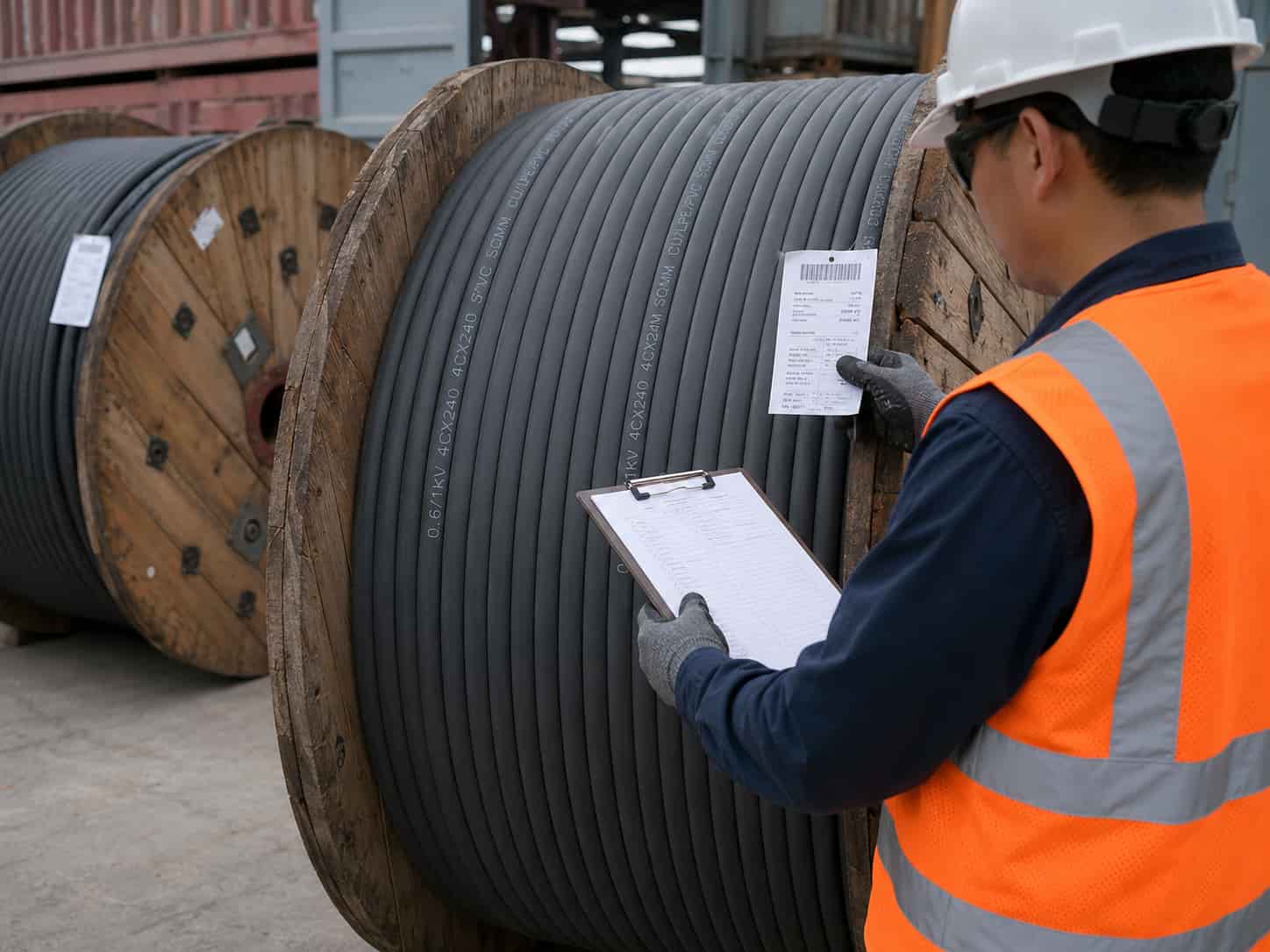
- Class 1 (solid): a single solid round wire — the least flexible, only suitable for fixed installation. Not a flexible cable conductor.
- Class 2 (stranded): multiple stranded wires — standard for fixed-installation power cables (IEC 60502-1). More flexible than solid but not suitable for repeated bending applications.
- Class 5 (flexible): fine stranded wires — significantly more flexible than Class 2 for the same cross-section. The standard conductor class for portable equipment cables and flexible cords. Handles repeated bending, vibration, and movement without premature fatigue.
- Class 6 (ultra-flexible): ultra-fine stranded wires, maximum strand count — the most flexible conductor class. Required for welding cables, mining trailing cables, winding and reeling cables, and any application requiring thousands or millions of flex cycles.
Key Point: The conductor class is the most important specification for a flexible cable application. A cable with Class 2 conductors marketed as ‘flexible’ will fail prematurely in any application requiring repeated bending. For portable equipment, always specify Class 5. For welding, reeling, or high-cycle trailing applications, specify Class 6.
Insulation and Sheath Materials for Flexible Cables
Flexible cable insulation and sheath materials must remain flexible throughout the operating temperature range and must resist the environmental conditions of the application — oil, water, UV, abrasion, and in some cases ozone and flame.
PVC Insulation and Sheath
Standard PVC compound (used in H05VV-F and H07VV-F flexible cords):
- Operating temperature: -5°C to +70°C for standard PVC — becomes brittle at lower temperatures, limiting use in outdoor or cold environments
- Oil resistance: poor — standard PVC deteriorates in contact with mineral oil, hydraulic fluid, and most industrial lubricants
- UV resistance: moderate — acceptable for light outdoor exposure but not for long-term direct sun in tropical climates
- Cost: lowest of flexible cable sheath materials — suitable for indoor light-duty applications
- Flame retardance: standard PVC will propagate flame; FR-PVC grades available
Rubber (EPR) Insulation and Neoprene/PCP Sheath
Heavy-duty rubber construction (used in H07RN-F and equivalent industrial flexible cables):
- Insulation: EPR (ethylene propylene rubber) — flexible at low temperatures, good electrical properties, superior to PVC for wet environments
- Outer sheath: polychloroprene (PCP/neoprene) or synthetic rubber — oil-resistant, ozone-resistant, UV-resistant, flexible at -25°C to -40°C
- Operating temperature: typically -25°C to +60°C continuous — suitable for outdoor industrial use in most climates
- Oil resistance: good — PCP sheath resists most mineral oils, hydraulic fluids, and industrial chemicals
- Abrasion resistance: excellent — rubber sheath withstands dragging, surface contact, and mechanical abuse far better than PVC
- Flame retardance: to IEC 60332-1 as standard; IEC 60332-3 for cables in bundles
- Cost: 30–60% higher than PVC equivalent — justified by longer service life in demanding outdoor or industrial environments
Thermoplastic Elastomer (TPE) Sheath
TPE (thermoplastic elastomer) sheaths are an increasingly common alternative to rubber in industrial flexible cables:
- Operating temperature: typically -40°C to +90°C — better cold flexibility and higher temperature rating than standard PVC and comparable to rubber
- Oil resistance: comparable to PCP rubber
- Recyclability: TPE is thermoplastic — more easily recycled than thermoset rubber (PCP/neoprene), an advantage for projects with environmental requirements
- Processing: TPE can be processed on standard thermoplastic extrusion equipment, which some manufacturers prefer over the rubber vulcanization process
- Performance: in most industrial flexible cable applications, high-quality TPE performs comparably to PCP rubber
Industrial Rubber Flexible Cables (H07RN-F and Equivalents)
The H07RN-F designation is the IEC 60245 code for the most widely used heavy-duty industrial flexible cable: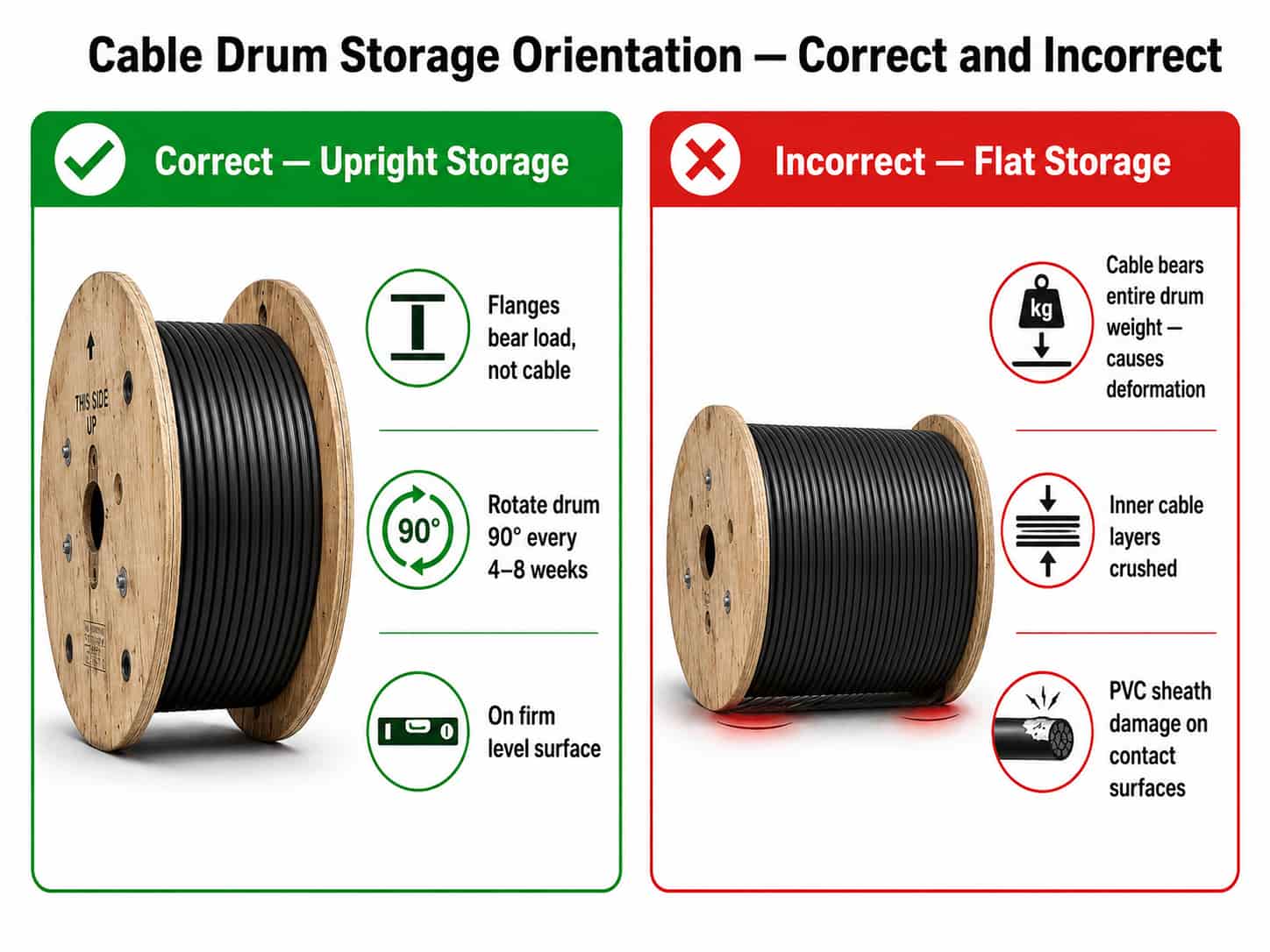
- H07RN-F breakdown: H = harmonized cable, 07 = 450/750V rated voltage, R = rubber insulation, N = neoprene (polychloroprene) sheath, F = flexible (Class 5 conductor)
- Voltage rating: 450/750V — suitable for single-phase and three-phase 400V systems with good margin
- Conductor: Class 5 flexible stranded copper
- Insulation: rubber compound (typically EPR or equivalent)
- Outer sheath: neoprene/PCP rubber — oil-resistant, UV-resistant, cold-flexible
- Core count: 1-core to 5-core plus earth, depending on application
- Standard: IEC 60245-4 (rubber insulated flexible cables and cords)
H07RN-F is the default specification for:
- Portable power tools in outdoor and industrial environments — angle grinders, drills, compressors, electric saws
- Temporary construction power distribution — site distribution boards to portable equipment
- Stage and event power supply cables
- Agricultural equipment power supply
- Short trailing cables for mobile industrial equipment where MV trailing cable is not required
Note: H07RN-F is rated at 450/750V — this means the cable is suitable for 400V three-phase systems where the voltage between any conductor and earth does not exceed 450V, or between any two conductors does not exceed 750V. For 415V or 440V three-phase systems, H07RN-F is adequate. For 690V systems, a higher voltage-rated flexible cable is required.
Light-Duty PVC Flexible Cables (H05VV-F and H07VV-F)
PVC-sheathed flexible cables are the standard for light-duty indoor applications — office equipment, domestic appliances, light workshop tools, and indoor extension leads.
- H05VV-F: 300/500V rated, PVC insulation and sheath, Class 5 conductor — suitable for indoor light-duty applications at ambient temperatures above 0°C
- H07VV-F: 450/750V rated, PVC insulation and sheath, Class 5 conductor — slightly higher voltage rating, for heavier indoor tools
- Neither H05VV-F nor H07VV-F is suitable for outdoor industrial use where the cable is exposed to oil, weather, or abrasion — in these environments, H07RN-F rubber cable is the correct specification
- Standard: IEC 60227-5 (PVC-insulated flexible cables and cords)
Key Point: The most common flexible cable specification error in B2B procurement is specifying H05VV-F or H07VV-F for outdoor construction site or industrial use where oil exposure is present. PVC-sheathed flexible cable deteriorates rapidly in contact with oil and in prolonged outdoor use — the outer sheath becomes sticky, then cracks, exposing the insulated conductors. Always specify H07RN-F rubber for any application with oil exposure or sustained outdoor use.
Welding Cable
Welding cable is a specialist single-core flexible cable designed for electric arc welding applications — carrying very high DC currents (typically 200–600A) from welding machines to electrode holders and earth clamps.
Construction
- Conductor: Class 6 ultra-flexible stranded copper — ultra-fine wires for maximum flexibility during welding, where the cable is constantly moved and repositioned
- Voltage rating: 1kV DC — welding machines output DC voltage, and the cable is rated for DC applications rather than AC
- Insulation: rubber compound (EPR or natural rubber) — flexible at low temperatures, resistant to heat generated by high welding currents
- No outer sheath: welding cable is typically a single insulated conductor without a separate sheath — the rubber insulation serves both as conductor insulation and outer mechanical protection
- Color: welding cable is typically black (electrode cable) or red (earth return) — confirm color coding convention with the project team
- Standard: IEC 60245-6 (welding cable)
Cross-Section Selection for Welding Cable
Welding cable cross-section is selected based on the welding machine rated current and the cable length — longer cable runs require larger cross-sections to limit voltage drop and cable heating:
Selection by Application: The Decision Matrix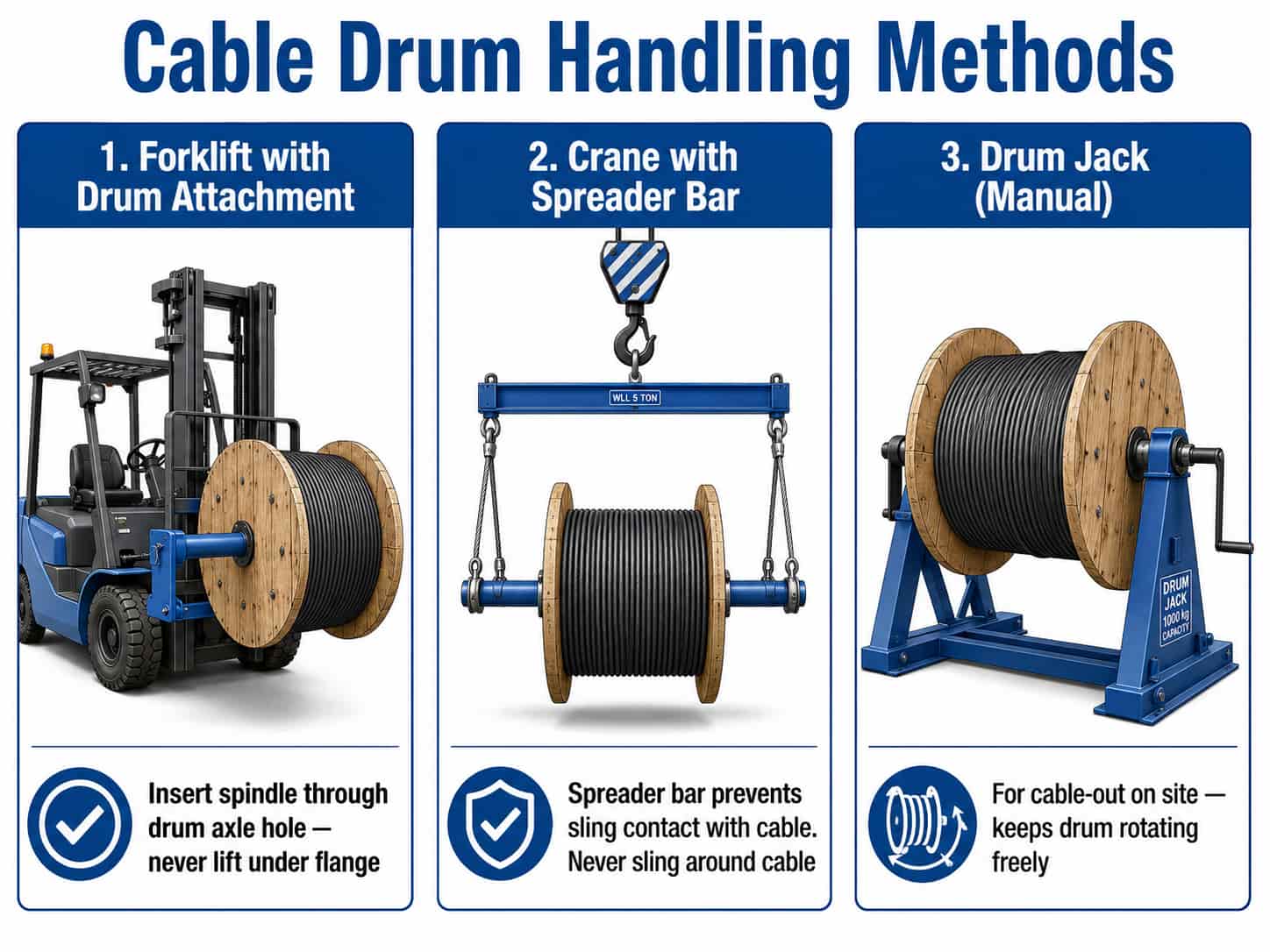
Specification Checklist for Flexible Cable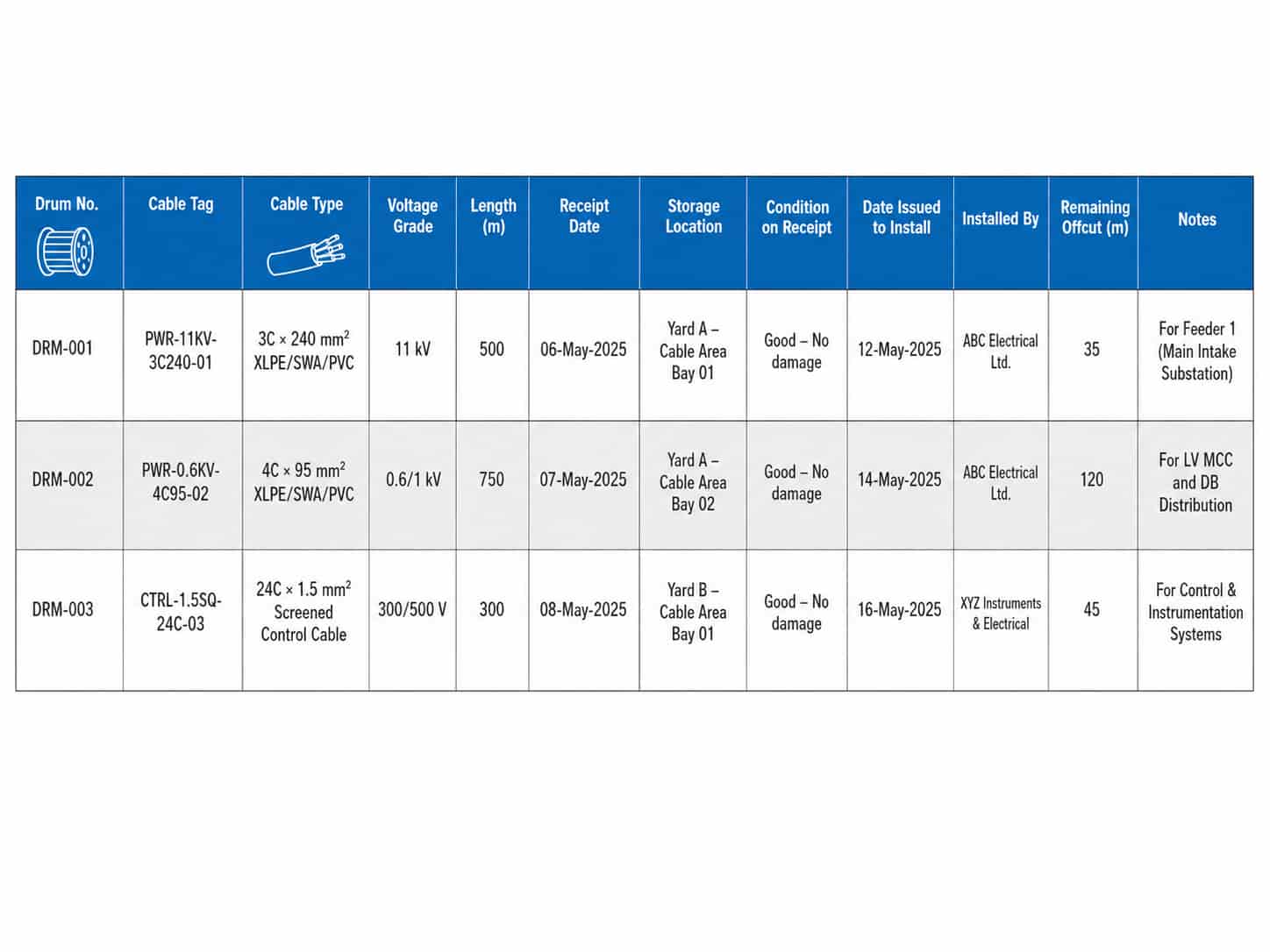
When specifying flexible cable for B2B procurement, include the following parameters:
- Application: portable tool, outdoor trailing, welding, overhead crane, heat-resistant, or other
- Voltage rating: 300/500V (H05), 450/750V (H07), or 0.6/1kV
- Conductor class: Class 5 (flexible) or Class 6 (ultra-flexible/reeling)
- Number of cores and cross-section (mm²)
- Insulation material: PVC, rubber (EPR), silicone, or other
- Outer sheath: PVC, neoprene/PCP, TPE, PUR, or other
- IEC designation where known: H07RN-F, H05VV-F, H07BQ-F, or equivalent
- Operating temperature range: minimum and maximum
- Oil resistance required: yes or no
- Flame retardance: IEC 60332-1 or IEC 60332-3
- Total quantity (meters) and standard reel or coil length
- Applicable standard: IEC 60245 (rubber) or IEC 60227 (PVC)
Quotation Requirements
RichingPower supplies industrial flexible cables including rubber-sheathed flexible cords (H07RN-F equivalent), PVC-sheathed flexible cords, welding cables, and trailing cables for mobile LV equipment. To receive an accurate quotation, please provide:
- Cable application and operating environment
- Voltage rating and conductor class (Class 5 or Class 6)
- Number of cores and cross-section (mm²)
- Insulation and sheath material requirements
- IEC designation if known
- Operating temperature range
- Total quantity (meters) and preferred coil or reel length
- Applicable standard (IEC 60245, IEC 60227, or equivalent)
Submit your flexible cable specification via the RichingPower contact page. If you are unsure which flexible cable type is correct for your application, describe the equipment, environment, and duty cycle and our team will recommend the appropriate specification.
Conclusion
Flexible cable selection is driven by the application — the operating voltage, the duty cycle of movement, the environmental conditions, and the current being carried. The two most important specification decisions are conductor class (Class 5 for general flexible, Class 6 for reeling and high-cycle applications) and sheath material (PVC for indoor light-duty, rubber/PCP for outdoor and oil-exposed industrial use).
The IEC designation system — H07RN-F, H05VV-F, H07BQ-F — encodes the voltage rating, insulation, sheath, and flexibility class in a compact reference that suppliers can interpret unambiguously. Including the IEC designation in a flexible cable procurement inquiry eliminates the ambiguity of descriptions like ‘heavy-duty rubber cable’ and ensures that quotations are comparable.
For conductor class reference in fixed-installation cables, see How to Read a Cable Specification Sheet. For high-voltage trailing cables used in mining, see
Mining Power Cable: A Procurement Guide. Contact RichingPower with your flexible cable specification for a quotation.